The Pandyan Kingdom According to Marco Polo

The Pandyan kingdom went into decline after the Cholas of the Vijayalaya bloodline defeated them in the beginning of the 10th century AD. We can say that the Pandyans lived under the shadow of the Chola empire for about 300 years.

Around 1220 AD or earlier, the Pandyans start regaining their strength. They finally destroyed the Cholas and as of 1279 AD, they reigned supreme in the Tamil region. 

During the zenith of the Pandyan empire in the late 13th century AD, they were said to be the richest empire in the world. The Pandyan empire was visited by the famed traveler Marco Polo in 1293 AD.

Let's take a look at what Marco Polo has said about the Pandyan empire in his journal. I have referred to The Travels of Marco Polo, as translated by Henry Yule and The Travels of Marco Polo The Venetian by William Marsden & John Masefield. 

Whatever I have given here is very brief. You will need to read the full chapter of the journals if you want more information.


  • Marco Polo starts by mentioning that the Pandyan kingdom which was also called as Maabar is 60 miles west of Sri Lanka. The kingdom was ruled by 5 brothers. The name of the king is Sonder Bandi Davar (Sundarapandi Thevar).

Based on the existing studies on Pandyan polity, we do know that there will always be 5 Pandyas ruling as the ancient kingdom was often divided into 5 provinces. The chief of Madurai will usually become the king of the empire. They are usually brothers or parallel cousins or even uncles and nephews of the same bloodline.

Together they will be called as PanchaPandya. After the Pandyas suffered defeat at the hands of the Muslim invaders, they retreated south to Tinnevely region. They continued ruling and fighting from there even during the Nayak period.

According to some sources, the last of the PanchaPandyas were based in these 5 places; Korkai, Kayathar, Tenkasi, Vallioor and Ukkirankottai. I am not very certain of the location of each PanchaPandya in 1293 AD.

No photo description available.
Location of PanchaPandyas after the fall of the last Pandyan empire; Tenkasi, Kayathar, Ukkirankottai, Vallioor and Korkai. 

  • It is the finest and noblest province in the world. They have fine pearls. The king is worth more than a city's wealth. People wore minimal clothes.

The Pandyan king and his subjects are said to wear only a loincloth covering the body from the waist down. Being a European who wore many layers of clothes, Marco Polo could have over exaggerated what he saw.

The king is also said to wear many ornaments of gold and precious stones from his neck down to his waist. He also wore gold arm bracelets. The worth of these ornaments is more than a city.


  • The king says 104 prayers everyday and repeats the word Pacauta! Pacauta! Pacauta!

Perhaps what is meant by Pacauta is Pasupata? We do know that the Pandyans were ardent Saivites. In fact, the tutelary deity of the Pandyan royal family is Siva in the form of Chandrasekhara with Agastya as their kulaguru.

  • The king had 500 wives and has his own Trusted Lieges who will burn themselves if the king dies.

Well, what can we expect from an extremely wealthy king? He would definitely spend on harem and also to spread his genes. The king's bodyguard will commit suicide if the king dies. This was a common practice in ancient Tamilakam. It is called senchoru kadan (blood rice debt). 

Usually goats will be slaughtered in ritual practices and the blood of the animal will be mixed with boiled rice. This will then be distributed by the king to his selected group of bodyguards. Should the king die in battle, the bodyguards will commit navakandam (Tamil version of seppuku/harakiri) and join their master in the afterlife. 
  • The empire spends a lot on horse purchase. More than 2000 horses each year.
The Pandyans imported the horses from the Arabs. For some reason, they were not good in breeding horses. So they ended up spending money in importing these animals especially for the use of their cavalries. 

  • Criminals were allowed to commit navakandam. Sati was common. Pandyans including their king obeyed the law.
Pandyans place a very high importance on law and justice. Criminals were given the option to sacrifice themselves by offering the death to the deity of choice. Such criminals will be paraded and there will be announcement that the criminal has offered himself to a particular deity. He will then be given 12 knives/daggers to use for the ritual suicide.

Those who lent money were allowed to draw a circle around those who borrowed and demand for assurance of repayment. It is said that the king himself went through this when a merchant who lent him money suddenly drew a circle around him and his horse!

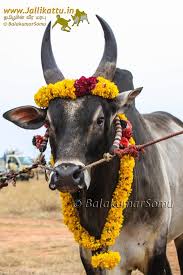
  • People pray to Ox and don't eat beef. However, there is a community that eats beef from dead cows/ox. They are known as Govis.
This is not surprising at all. The Pandyan land is the land of Jallikattu. Cows and bulls are venerated. Southern Pandyan territories like Tirunelveli is popular for the worship of the guardian deity, Madan (bull man) who is also known as Madasamy or Sudalai Madan. While some may mistake him for Siva, Madan is actually Nandi.

The Govis mentioned by Marco Polo may refer to the Paraiyars. They don't usually slaughter the cow/bull. However, if the animal dies a natural or accidental death, they may consume its flesh.

Related image

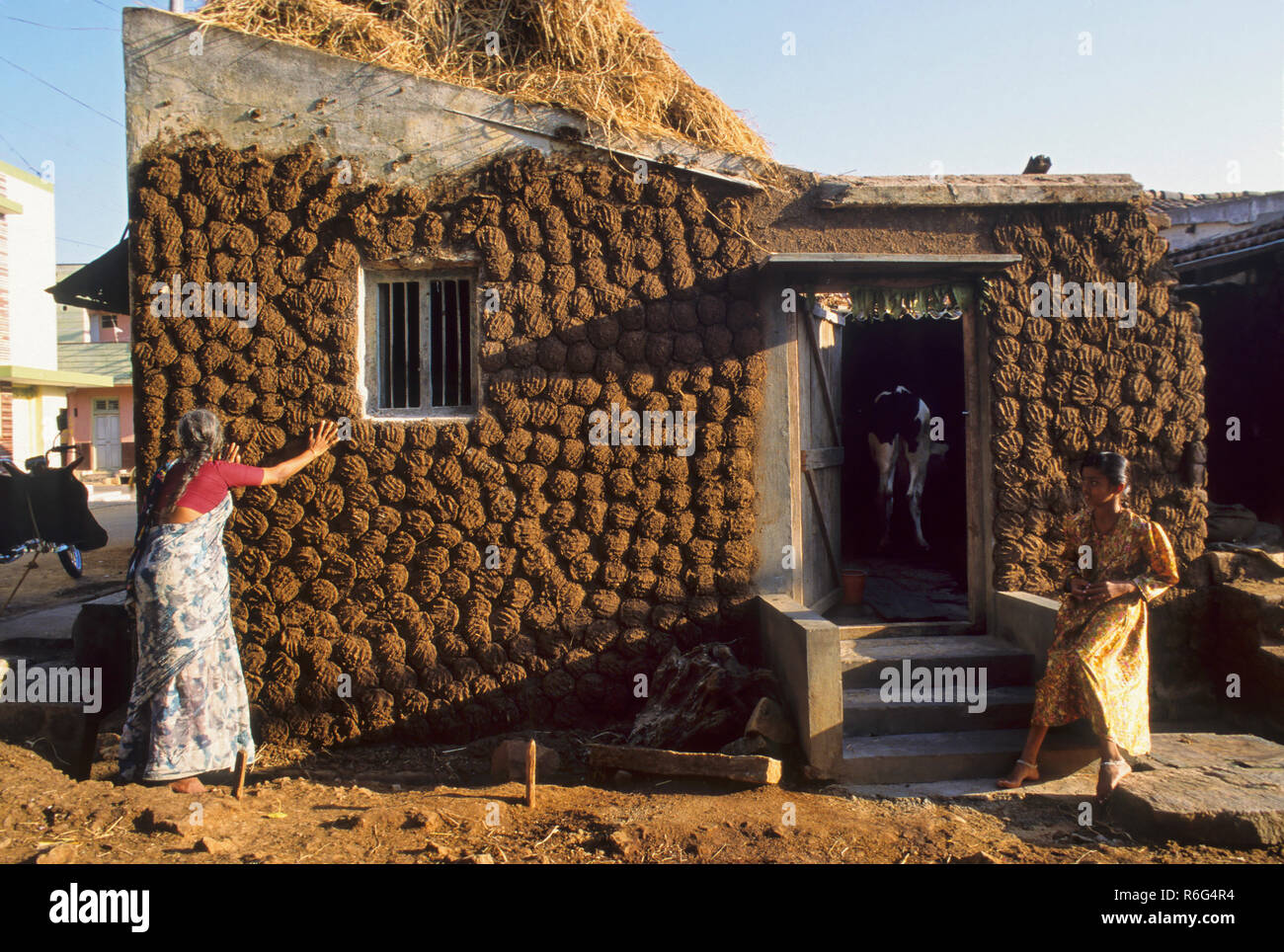
  • The apply cow dung on houses. They grow only rice and no other wheat.

Image result for cow dung tamil houses


  • The soldiers battled naked
Marco Polo did mention that the soldiers use lance and shield during battle and that they are mostly naked. Perhaps the ancient Pandyan warriors preferred to fight naked like the Spartans or they could have worn minimal clothing with almost no armor and Marco Polo probably just exaggerated it.

  • The Saracens were butchers. Pandyan citizens bathe twice a day. They eat with their right hand. Everyone have their own drinking vessel and they don't touch the vessel with their mouth when they drink.

Looks like the Pandyans were very hygienic! Saracen is the term used for Arab Muslims.

  • Does not allow drunkards and seafarers to become guarantors
Well it makes sense because those who are drunkards cannot be trusted with their words and seafarers will not be around at all times.

  • Rain during June, July and August. People can tell a person's character by looking at the face and body. People knew how to interpret omens. People believe in Astrology.
There was little rain in the Pandyan country. The Pandyans had a good water management system. They built water tanks to store and channel water. The art of predicting a person's character by looking at the facial features of physical feature is known as Samudrika Lakshana. 

The people also believed in omens. For example, if someone starts a journey and suddenly hears a sneeze, he may pause for a moment or cancel the journey. As per Polo's journal, we also know that astrology played an important role in the lives of the people. Natal chart will be drawn when a child is born.
  • Boys leave house when they are 13
Young boys are considered as adults when they reach 13. They are expected to fend for themselves. They will be given some goats or money equivalent and will be expected to earn money via trade. They are no longer the responsibility of the parents when they are 13.
  • Shark charmers help the pearl divers
One of the things which caught my interest was the mention of shark charmers. I have heard about this before. They are called Kadal Katti (Sea Binders) in Tamil. They will charm the sharks so that it does not attack the divers whenever they dive into the sea to look for pearls. Apparently they use some mantras to do this. The fishermen and pearl divers of the Pandyan nation depended on the service of these charmers!

I can go on writing more about what Marco Polo has mentioned  but I will stop here for now.

Following a series of attacks from Muslim invaders, the Pandyan empire finally ended in around 1333. The Madurai Sultanate was then established. 

It lasted for about 43 years. During this time, the Pandyans shifted to Tirunelveli and ruled from there as shown in the image at the start of this article.

In my next article, I will write about a particular dark period in Pandyan history. One that shattered them beyond revival.

The SriVidya Connection of Madurai

Image result for madurai kadamba tree
Kadamba tree near West Gopuram of Meenakshi Temple
Picture Credit: S. James

In Hinduism, the worship of the Divine Mother Goddess is known as Saktham. Among the various schools in Saktham, one is known as SriVidya. 

In the SriVidya tradition, the supreme goddess is called Lalita TripuraSundari. She is also called Kameswari. In Kancheepuram, she is worshiped as Kamakshi.

The goddess Varaahi serves as her Chief Commander. Matangi is her Prime Minister. Together the trio of Lalita, Matangi and Varaahi represents Icha, Jnana and Kriya Sakthis.

In Madurai, the goddess Matangi is worshipped as Meenakshi. As Ngana Sakthi, she represents represents speech and wisdom. This is why she has a parrot. In Hinduism, parrot symbolizes speech. Matangi is also known as Shyamala or RajaShyamala. 

The word Shyamala refers to her dark green complexion like that of an emerald stone. Hence she is called as Marakatha Syama (marakatham = emerald). 

One of the many names of Matangi is Kadamba Vana Vaasini. This was mentioned in the famous song known as ShyamalaDandakam. It was written by Kalidasa. Kadamba Vana Vaasini means she who resides in the Kadamba forest. 

Matha marakatha shyama, Mathangi madha shalini,
Kuryath kadaksham kalyani, kadamba vana vasini,
Jaya Mathanga thanaye, Jaya Neelolpala dhyuthe,
Jaya Sangeetha rasike, Jaya Leela shuka priye
-Kalidasa's Shyamala Dandakam-

Madurai has many names. One of it is KadambaVanam because it used to be a large Kadamba forest. The entire Madurai city is the abode of the goddess Syamala. 

However, there are not many Kadamba trees left in today's Madurai. The SthalaVriksham (temple tree) of the Madurai Meenakshi temple is the Kadamba tree. It is believed that this tree was part of the original Kadamba forest before the forest was cleared to build the city over 2500 years ago. The tree is still there in the temple.

So when you go to Madurai, bow down to the beautiful Meenakshi and as you sit under her Kadamba tree, remember this article and the SriVidya connection of Madurai.

Image result for madurai meenakshi


Should India Relocate Its Capital to Nagpur?

Nagpur in India

The present location of India's capital, New Delhi, has resulted in a considerable bias towards northern regions in terms of development and decision-making within the country. Moreover, its geographical proximity to Pakistan and China raises security concerns. To address these issues, a prudent approach for the Indian government could be the contemplation of relocating the capital to a more centralized and strategically advantageous location.

Nagpur: A Favourable Contender
Nagpur emerges as an ideal candidate for India's new capital city owing to several compelling factors. Formerly the geographic center of undivided India, Nagpur retains historical significance and now stands as one of the world's fastest-growing cities with an approximate population of 2.5 million. Notably, the Oxford Economic report for the 2019-35 period ranks Nagpur at an impressive #5 globally, underscoring its robust economic potential.

Strategic Advantages of Nagpur's Central Location
One of the significant advantages of Nagpur's central position is its potential to catalyze economic growth in the heart of India. Unlike New Delhi, which poses logistical challenges for southern states like Kerala and Tamil Nadu, Nagpur's location would be more balanced, providing almost equidistant access to all corners of the nation. This balanced accessibility would foster increased regional economic integration and development.

Enhanced Transportation Infrastructure and Connectivity
The relocation of India's capital to Nagpur could result in substantial investments in transportation infrastructure, such as roads, highways, and railways, connecting the city with other parts of the country. The consequent enhancement in regional connectivity would facilitate the seamless movement of goods, services, and people, thereby giving a considerable boost to economic activities across the central region.

Alleviating Urban Congestion and Boosting Urban Planning
New Delhi currently grapples with severe traffic congestion and overcrowding, negatively impacting transportation efficiency. Shifting the capital to Nagpur would alleviate this burden, easing traffic pressure in New Delhi while encouraging better traffic management and urban planning in both cities.

Potential for Defense Advantages
Nagpur's central location presents strategic advantages for defense purposes. Being geographically closer to various regions, the relocation would enable more efficient deployment of defense forces and quicker response times during emergencies or security threats. Additionally, the establishment of defense-related institutions, research centers, and manufacturing facilities in Nagpur would foster regional defense infrastructure development, equitably distributing defense capabilities nationwide.

Fostering Cultural Heritage and Tourism
Nagpur is renowned for its rich cultural heritage, and designating it as the capital could provide an opportunity to promote and highlight the diverse cultural tapestry of central India. Consequently, this could lead to increased tourism, showcasing Nagpur's historical sites, traditions, arts, and crafts, thereby stimulating the local economy while preserving and celebrating India's cultural heritage.

Conclusion
The potential relocation of India's capital from New Delhi to Nagpur, though not without its challenges, offers significant benefits for the nation's overall growth and development. By strategically positioning the capital city in Nagpur, India can achieve a more balanced and prosperous future, fostering equitable regional progress and enhancing its national potential.

The Benefit of Romanising Tamil Writing

Tamil language was written in several older scripts before it was written using the present day Tamil script.


Personally, I prefer the Romanised version, the ISO15919.

Some benefits of Romanising the Tamil writing:

1. The switch from Abugida to Alphabet system also means that less letters will be needed.

2. We only need a maximum of 36 letters to write in Tamil without errors and with accurate pronunciation.

Presently used traditional Tamil script. The Sanskrit syllables are represented using Grantha script. In total, a person needs to memorize not less than 216 unique letters to write in Tamil using this script.
Using Romanised Tamil, a person only needs 36 letters as shown in the green boxes to write every sound combination that exist in Tamil language! This even includes the Sanskrit sounds.

3. It will be a lot more easier to learn the writing as most of us are familiar with the existing Roman (Latin) alphabets. A person needs to only know less than 10 additional letters with diacritics.

4. Fewer letters also mean that it will now be faster to learn Tamil writing. 36 familiar looking letters is definitely faster than learning a combo of 216 unfamiliar looking letters!

5. More people will be attracted to learn not just the writing but also the language itself because it is now easier and faster.

6. This will boost the growth of Tamil language and help to spread it faster around the globe.

7. Tamil will have a global appeal and attract more non-speakers,

8. Typing Tamil using keyboards will be a lot more easier than the present script as shortcuts can be created for the additional diacritics.

9. This will also benefit the printing and publishing industries as there will be fewer letters to focus on.

10. It will also be easier to transliterate it into Braille. Even the blind can start reading in Tamil!


My Talk On Melaka Chettis

My first post on this community can be read here : Chetti vs Chettiar- Are Those in Malacca Confused? 

The Melaka (Malacca) Cheti community managed to retain their identity for 500 years in Melaka far away from their original homeland in India because of the following:

1. They maintained their surnames; Pillay, Naicker, Chitty, Mudaliar, Rajah, Konar, Kullen, Pathar, Pandaram and Padayachi.
2. They still use their traditional Thali pendants; Telugu Pottu Thali and Tamil Thali
3. They still continue the worship of their Hindu family deities (kula deivam)

If these 3 things were removed, the Melaka Cheti community would have lost their unique identity and assimilated with the local population in ancient Malaysia. The community would have not existed today.

Here is the video of my talk which was delivered on Sunday 3 March 2019. The event was organised by Melaka In Fact.

https://www.facebook.com/melakainfact/videos/1995264470599416/
Using some of the findings, I made some comparitive study. The Pillay familes of the Melaka Cheti have Angala Parameswari and Ayyanar as their family deity.

There are 100 sub divisions among the Vellalar community in Tamil Nadu. The Vellalars groups on the eastern side of Tamil Nadu like Arunattu Vellalar, Saiva Vellalar, Isai Vellalar, Sozhiya Vellalar use Pillai behind their names. The Arunattu Vellalars have about 35-40 family names although they use Pillay/Pillai as a shared surname.

Here are 3 examples which seems to strike some similarity with the Pillays of the Melaka Cheti community:

Family name : Konnakudaiyan
Kula Deivam : Angala Parameswari
Village : Serugudi

Family name : Panaiyadiyan
Kula Deivam : Ayyanar
Village : Serugudi

Family name: Pavaludaiyan
Kula Deivam : Ayyanar
Village: Serugudi

The Pillays of the Melaka Cheti could have been from the Arunattu Vellalar community. The Arunattu Vellalars can be found in areas like Kumbakonam and even Chidambaram.

Coincidentally, many Padayachis live in these area. The remaining surnames of the Melaka Cheti could also be found in the regions surrounding these two places.

Perhaps the ancestors of the present day Melaka Cheti community lived in the Kumbakonam or Chidambaram area in ancient times before they migrated to Melaka?

This is of course just a theory.  We need to find more evidence to link it.


A Prayer For Mother Tamil


We Tamils have deified our mother tongue as a goddess and call her Tamil Annai or Tamil Thaai (Mother Tamil), representing the Tamil language and the Tamil society itself.

We have also dedicated a prayer song or vaalthu for Her. Deification is against the religious teachings of the non-Hindus like Muslims but It is not a problem for the rest of us Hindus.

In a circular dated November 23, 1970, the Government of Tamilnadu designated the Tamil Thaai Vaalthu as a “prayer song" and not as an anthem. This means it has a religious significance unlike Jana Gana Mana which is the national anthem of India.

Therefore, the Tamil Thaai Vaalthu is actually a form of Sakthi worship. It is the core principle of Saktam as seen in several Hindu slokas because the mother tongue (Tamil Annai) also represents consciousness, intelligence and race.

The Saktam religion teaches Hindus to see Sakti in every aspect. Whenever you sing the Tamil Thaai Vaalthu, you are worshipping the Divine Mother in the form of Mother Tamil even if you happen to be an Atheist.


Yaa Devi Sarva Bhooteshu Chetanetyaabhi Dheeyate
Namastasyai Namastasyai Namastasyai Namo Namaha
(Meaning:Salutations again and again to the Devi (Goddess) who abides in all beings as consciousness)

Yaa Devi Sarva Bhooteshu Buddhi Roopena Samsthita
Namastasyai Namastasyai Namastasyai Namo Namaha
(Meaning:Salutations again and again to the Devi (Goddess) who resides in all beings in the form of intelligence)

Yaa Devi Sarva Bhooteshu Jaati Roopena Samsthita
Namastasyai Namastasyai Namastasyai Namo Namaha
(Meaning:Salutations again and again to the Devi (Goddess) who resides in all beings in the form of race)

Yaa Devi Sarva Bhooteshu Matru Roopena Samsthita
Namastasyai Namastasyai Namastasyai Namo Namaha
(Meaning:Salutations again and again to the Devi (Goddess) who resides in all beings in the form of Mother.)

The lyrics of Tamil Thaai Vaalthu
நீà®°ாà®°ுà®™் கடலுடுத்த நிலமடந்தைக்கெ à®´ிலொà®´ுகுà®®்
சீà®°ாà®°ுà®®் வதனமெனத் திகழ் பரதக் கண்டமிதில்
தெக்கணமுà®®் அதிà®±்சிறந்த திà®°ாவிட நல் திà®°ுநாடுà®®்
தக்கசிà®±ு பிà®±ைநுதலுà®®் தரித்தநறுந் திலகமுà®®ே
அத்திலக வாசனைபோல் அனைத்துலகுà®®் இன்பமுà®±
எத்திசையுà®®் புகழ்மணக்க இருந்தபெà®°ுந் தமிழணங்கே!
தமிழணங்கே!
உன் சீà®°ிளமைத் திறம்வியந்துசெயல்மறந்து வாà®´்த்துதுà®®ே!
வாà®´்த்துதுà®®ே!!
வாà®´்த்துதுà®®ே!!!

Brimming Sea drapes exuberant Dame Earth!
With Beautified face in this exalted Indian Continent!
South In particular Divine Dravidian Country!
As Aesthetic Thilakam on its beauteous curved forehead!
Like the Fragrance of that Thilakam, for the entire world to be delirious!
your fervor spread in all directions!
Oh! Tamil Lady!
Ever remain afresh Thee alone! Purity intact too!
Delighted! Praise thou beauteous Tamil, youthful forever! Awestruck!
Praise unto thee!
Praise unto thee!

Ponggal Is Not A Secular Festival


Tamil Nadu celebrates Pongal with traditional fervour
Pic Credit: Thestatesman. Representative image Photo: AFP

Ponggal, the harvest festival of the Tamils, is often perceived as a secular celebration, observed by various cultures under different names. However, a detailed analysis reveals that Ponggal holds significant religious connotations and is primarily associated with the Hindu Tamil community. From its origins in the Sidereal solar calendar to the specific rituals and deities revered during the festival, Ponggal distinctly aligns with Hindu practices, setting it apart from Christianity and Islam.

The Significance of Ponggal in the Sidereal Solar Calendar
Ponggal marks the day when the Sun enters the 10th zodiac, Capricorn, at an angle of 270 degrees - 300 degrees of the celestial sphere. This event, also known as Makara Sankranti in Sanskrit, is derived from the Sidereal solar calendar and coincides with the Winter Solstice. While any community following this calendar system may acknowledge this celestial moment, in Tamil society, only Hindu Tamils utilize the Sidereal solar calendar for their religious observances.

Gurukkals: Guardians of Ponggal's Date and Time
The date and time of Ponggal are meticulously calculated and determined by the Gurukkals (priests) of Hindu temples who maintain the Panjangam (Almanac). Conversely, the Gregorian calendar is followed by Tamil Christians, while Tamil Muslims adhere to the Hijri lunar calendar. As such, Pastors and Imams do not base their religious or cultural celebrations on the Panjangam, further distinguishing Ponggal as a Hindu event.

Distinctive Rituals and Deities in Ponggal
Ponggal unfolds over three days, each marked by unique rituals and devotional offerings. The eve of Ponggal, Bhogi Pandigai, commemorates Indra, the lord of heaven, also known as Bhogindra or Bhogan, and is a day to express gratitude for rain and favorable weather. This deity holds significance solely in Hindu belief, making Bhogi Pandigai a Hindu celebration.

The first day of Ponggal, Surya Ponggal, involves worship of the Sun, Hari (Vishnu), and Lakshmi, symbolizing life, preservation, and prosperity, respectively. The veneration of celestial objects is exclusive to Hindus, setting Surya Ponggal apart as a Hindu occasion.

On the second day, Maatu Ponggal, bulls and cows receive worship, particularly in Hindu temples during Nandi worship. Although Jallikattu, a traditional sport involving bulls, is observed on this day, Hindu Tamils revere these animals and abstain from consuming beef, distinguishing Maatu Ponggal as a Hindu event.

The final day, Kaanum Ponggal, is devoted to fertility and features rituals honoring the virgin goddesses, Kanni deivam. This practice, unique to rural Tamil Nadu, reflects Hindu beliefs in seeking the blessings of these goddesses for fertile land. Kaanum Ponggal's association with Sakthi worship and the reverence of young unmarried girls as SapthaKannimaar aligns with Hindu traditions, making it exclusive to Hindu Tamils.

Conclusion: Ponggal as a Distinctly Hindu Festival
From its calendar basis to the specific rituals, deities, and practices involved, Ponggal bears the distinct hallmarks of Hinduism. While individuals of different faiths may partake in Ponggal celebrations alongside Hindus, the festival's essence and spiritual significance remain rooted in Hindu culture and belief. Acknowledging the non-secular nature of Ponggal does not imply opposition to participation by non-Hindus; rather, it serves to recognize and appreciate the cultural and religious heritage of this cherished Tamil harvest festival.

Are All Religions Really the Same?

Are all religions the same? Do they all teach the same things? We would have grown up hearing from our elders that all religions teach the s...