Making Deities Black? Check the Symbolism First

Image Credit: Andonious "Smo-G/A3V" Vassiliadis

In today's world, a noticeable trend has emerged within certain members of the Hindu community. Many images of deities are increasingly being painted in darker complexions. This practice is often explained as an act of equality and a gesture of standing against racism, since darker skin tones have historically been associated with social hierarchies and prejudice. 

While the intention behind this trend is admirable, the practice itself raises important questions. Are Hindu deities truly meant to be imagined in a single skin tone, regardless of scripture? Or is there a deeper reason why they have been traditionally described and visualized in a wide spectrum of colours? 

The truth is that the colours of Hindu deities are not chosen arbitrarily, nor are they reflections of racial identity. Instead, each deity is described in scriptural verses known as dhyāna ślokas, which prescribe their form, complexion, posture, and attributes for meditation. These descriptions serve a very specific spiritual purpose. 

They are designed to act as symbolic anchors for the mind, enabling the practitioner to meditate on the qualities and powers embodied by that deity. To paint every deity in the same complexion in the name of social equality may unintentionally overlook the profound metaphysical wisdom that these colours represent. 

Colours as Spiritual Language 
In the Hindu tradition, colour is a sacred language. Each shade embodies a quality, a mood, and an energy that helps the devotee establish a connection with the divine. The dhyāna ślokas, which appear in various scriptures, are essentially poetic visualizations that guide the imagination during meditation. By holding the prescribed image in the mind, the practitioner is able to internalize the attributes of the deity and move closer to spiritual realization. 

For example, in the Lalitā Sahasranāma and its associated texts, Goddess Lalita Tripurasundarī is envisioned as having a complexion the colour of vemilion and glowing with golden radiance. This description is not symbolic of race but of energy. Her reddish hue reflects her fiery creative force, her embodiment of passion transformed into divine bliss, and her role as the supreme source of cosmic creation. A devotee meditating on her form is not simply imagining a goddess of a particular skin tone but is invoking the energy of divine creativity. 

sindūrāruṇavigrahāṁ trinayanāṁ māṇikyamaulisphurat
tārānāyakaśēkharāṁ smitamukhīmāpīnavakṣōruhām .
pāṇibhyāmalipūrṇaratnacaṣakaṁ raktōtpalaṁ vibhratīṁ
saumyāṁ ratnaghaṭastharaktacaraṇāṁ dhyāyētparāmambikām

By contrast, Goddess Mātangī, one of the Mahāvidyās, is described as having the deep green complexion of an emerald. She is the patroness of inner wisdom, music, and unconventional knowledge. Her green form symbolizes the fertile abundance of nature as well as the hidden mysteries that flourish outside the boundaries of conventional order. Meditating on her prescribed colour is meant to awaken inner wisdom and unconventional insight. 

Goddess Matangi also known as Syamala. Image Credit: matangidevi 

Lord Muruga, also known as Kartikeya or Subramanya, is often described with a radiant red complexion. His hue represents youthful vigour, courage, and martial energy. His prescribed colour becomes a focus point in meditation, allowing devotees to internalize bravery, vitality, and divine protection. 

Thus, when scriptures prescribe a colour, they are giving practitioners a map for meditation. Each colour corresponds not to race, but to rasa, the essence of the deity’s spiritual power. 

The Buddhist Parallel 
This symbolism is not confined to Hinduism alone. In Buddhist traditions, especially within Vajrayana  practices, deities and bodhisattvas are also painted in specific colours. Each colour embodies a quality of enlightenment and serves as a meditative focus for practitioners. 

For instance, Amitābha Buddha is red, symbolizing compassion and the fire of transformation. Akṣobhya Buddha is blue, representing immovable stability and clarity of mind. Ratnasambhava is yellow, symbolizing generosity and abundance. Vairocana is white, representing purity and the all-encompassing nature of the dharmakāya. Amoghasiddhi is green, signifying accomplishment and fearlessness. 

Just as in Hinduism, these colours are not racial features but meditative codes. They serve as precise instructions for practitioners to focus their minds and embody the qualities of the enlightened state. 

The 5 meditational Buddhas in different colours. Image Credit: tibetanbuddhistencyclopedia

Why Colours Matter in Meditation 
When a devotee sits for meditation, the human mind needs a form to concentrate upon. Without a form, the mind wanders. The dhyāna śloka provides that form, complete with colour, ornaments, posture, and symbolic weapons. By following this prescription, the practitioner engages all senses and channels them towards spiritual realization. The colour of the deity plays a crucial role in this process. Red ignites energy and passion, green induces harmony and growth, blue represents vastness and depth, and white evokes purity and clarity. If all deities were painted in the same skin tone, these meditative distinctions would collapse, and the practitioner would lose an important tool for inner transformation. 

Colours also corresponds to our chakras. Image credit: mindvalley


The Question of Black Stone Mūrtis 
A common counterpoint that may arise is that most South Indian temples house deities carved from black granite or other materials. Does this not mean that the deities were always meant to be imagined as dark-skinned? What about statues made from brass? Does that mean the deities are also brown?

The answer lies in understanding the distinction between temple ritual practice and scriptural meditation practice. 

The mūrtis in temples were never intended to be the primary tools of meditation. Their primary purpose was to serve as living embodiments of the deity for abhiṣegam (ritual bathing), ceremonial worship, and festivals. Granite and other materials such as brass were chosen because of their durability, their ability to withstand constant ritual bathing with milk, water, ghee, turmeric, and sandalwood paste, and their natural sanctity as materials considered fit for consecration. 

Image credit: IBC Bakthi

When covered with milk, sandalwood paste, turmeric, or vibhuti (sacred ash), these mūrtis would not even appear black but would take on the colours of the substances used in worship. This shows that the stone’s natural colour was not meant to define the deity’s complexion, but rather to provide a suitable medium for ritual. 

The dhyāna śloka descriptions, on the other hand, belong to a different sphere altogether. They prescribe the form, colour, and attributes of the deity specifically for meditation. While the murti anchors the ritual, the meditative visualization anchors the mind. Both are valid, but they serve distinct purposes. Confusing the two can lead to misunderstandings about why a deity is described in a certain complexion in scripture. 

The Misunderstanding of Equality 
In the modern Hindu context, the trend of painting all deities with dark complexions is motivated by a noble sentiment. It seeks to challenge colourism and the social prejudice that often accompanies lighter or darker skin in human society. However, when this sentiment is extended into the sphere of religious iconography, it risks overshadowing the deeper scriptural intent. 

Image credit: tiethethali

Equality in Hindu thought does not mean uniformity. Instead, it means seeing the divine in all forms and understanding that all qualities, whether fiery red or tranquil green, belong to the same cosmic reality. By preserving the distinct colours of each deity, we do not promote inequality. Rather, we affirm the diversity of divine expression and allow each form to speak its unique spiritual language. 

Preserving Scriptural Integrity 
To understand why the preservation of prescribed colours is important, one must return to the scriptures themselves. The dhyāna ślokas are not artistic preferences but meditative instructions. They have been recited, preserved, and transmitted for centuries because they carry precise spiritual significance. Changing them arbitrarily in the name of social messaging diminishes their potency. 

If a devotee wishes to meditate on Lalita Tripurasundarī, they are instructed to imagine her as red, glowing like the sun. If they imagine her in another form, the results of the meditation may not align with the intended energy described in the scriptures. 

Similarly, imagining Matangi as emerald-green is an invitation to embrace unconventional wisdom, while focusing on Muruga’s radiant red form awakens courage and energy. These colours are not matters of choice but matters of spiritual precision. 

Muniswarans of Pachaiamman temple, Tiruvannamalai. They are represented in different colours.

Towards a Balanced Understanding 
It is important to clarify that acknowledging the symbolic colours of deities does not invalidate the movement against racism. The fight against social prejudice is essential, and celebrating darker skin tones in human society is an important step toward equality. However, the mistake lies in confusing human social realities with divine symbolism. 

Deities are not meant to be representations of human race. They are embodiments of cosmic qualities, and their colours are metaphors for energies far beyond the human realm. Instead of reducing every deity to a single complexion, a better approach would be to educate devotees about the symbolic significance of colours. 

By doing so, we can celebrate diversity both in human identity and in divine representation. In fact, when devotees learn why Lalita is vermilion-red, why Matangi is green, and why Muruga is red, they come to appreciate the immense depth of the tradition. 

Image credit: enlightenmentthangka

Conclusion 
The trend of painting all Hindu deities in darker skin tones may stem from a well-intentioned desire to fight racism, but it risks obscuring the profound spiritual symbolism of colour in Hindu and Buddhist traditions. Each deity is described in scripture with a specific complexion, not as an indication of race, but as a key to meditation. 

Colours in this context are not social markers but spiritual codes. They are the language through which the infinite communicates with the human mind. To honour this wisdom, it is important to preserve the scriptural descriptions of deities and to understand their significance. 

True equality is not about making everything look the same, but about recognizing the divinity in all forms and colours. In the realm of the sacred, colour is not a boundary but a bridge, guiding the practitioner from the outer form to the inner essence, from meditation to realization.

Chola Warlords: Who Were the Paluvettaraiyars?


Ponniyin Selvan I movie poster showing actor Sarathkumar as Periya Paluvettaraiyar and actor Parthiban as Chinna Paluvettaraiyar.

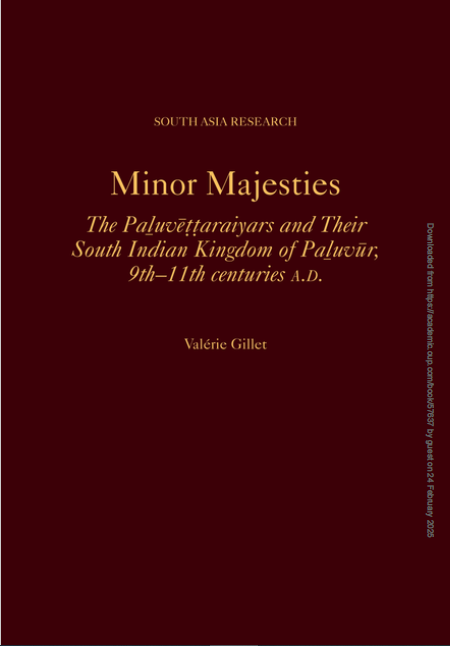
In 2024, Oxford University Press published Minor Majesties: The Paluvēṭṭaraiyars and Their South Indian Kingdom of Paluvūr, 9th–11th Centuries A.D., a groundbreaking study by historian Valerie Gillet. In the book’s opening chapter, A Tentative Biography of the Paluvettaraiyars, Gillet delves into the lineage and origins of this influential family. 

These Chola warlords traced their lineage to the formidable Maravars, an ancient warrior tribe renowned for their valor. However, I believe that while the Paluvettaraiyars were indeed of Maravar descent, they likely forged alliances through intermarriage with those of the Kallar and Agambadiyar clans, further solidifying their power and influence.

Prominent figures in the medieval Chola era, the Paluvettaraiyars played a pivotal role in shaping the empire’s political and military landscape. Through strategic marriages with the Chola royal family and their service as administrators and commanders, they cemented their power, leaving a lasting imprint on South Indian history.

For a deeper insight into their fascinating legacy, I have included the first chapter of the book for your reading below.


Manabharana Is Not Malay (Manabharana Bukan Melayu)

In recent times, an alarming narrative has emerged within the Malaysian blogosphere, suggesting a historical event that appears to be a misinterpretation or perhaps a deliberate misinformation campaign. 

The claim revolves around a so called Malay prince named Manabharana from Srivijaya, purportedly attacking and conquering the Chola kingdom. This misleading story has gained traction and is spreading like wildfire across various social media platforms. The need to address and rectify such inaccuracies is crucial not only for the sake of historical accuracy but also for fostering a responsible and informed online community.

To delve into the matter, it is essential to clarify that historical records reveal the existence of multiple individuals named Manabharana throughout history. However, a nuanced understanding reveals that all these figures were Tamils (Damila) hailing from the Pandya kingdom, with references to their exploits documented in Tamil inscriptions and Sri Lankan chronicles. Remarkably, there is an absence of any historical records in Malaysia that would substantiate the claim of a Malay prince named Manabharana attacking the Chola kingdom.

The title "Manabharana" typically denotes a familial connection to the Pandyan royal lineage, often bestowed upon sons within the Pandyan dynasty. It is crucial to acknowledge that the Manabharana associated with the attack on the Chola country, earning the epithet "Cholakulantaka" (he who destroyed the Chola family), was indeed a Pandyan king. Contrary to the circulating narrative, this historical figure is not a Malay prince.

Similarly, it is worth mentioning that Kulothunga Chola I (1070-1120 AD) gave his princess Chudamali in marriage to prince Manabharana. This Manabharana was also known as Sri Virabahudevar or Pandiyanar Virapperumal. This Manabharana was the son of Jatavarman Srivallabha Pandya and princess Mitta, the younger sister of Sri Lankan king Vijayabahu (1055-1111 AD). (refer to page 227 below)

To further bolster this clarification, references from inscriptions have been attached, underscoring the importance of relying on authentic historical documents rather than perpetuating unfounded claims. The dissemination of inaccurate historical information not only distorts the understanding of the past but also has far-reaching consequences in shaping perceptions and narratives. 

In a globalized and interconnected world, it is imperative to approach historical accounts with discernment and to resist the temptation to propagate misinformation, as it can contribute to the erosion of accurate historical knowledge and the promotion of cultural misunderstandings. 

By emphasizing the importance of accuracy and critical thinking, we can collectively work towards fostering a more informed and responsible discourse in both online and offline spaces.

12th century inscription of the Ranganathasvamy Temple, Srirangam, makes reference to one Manabharana who lived earlier. He destroyed the Cholas (epithet Cholakulantaka) but this Manabharana is not a Malay from Sri Vijaya. He is a Tamil from Pandya kingdom.

Epigraphica Indica Vol XXXVIII (January 1969) by Archaeological Survey of India 

Epigraphica Indica Vol XXXVIII (January 1969) by Archaeological Survey of India 

Epigraphica Indica Vol XXXVIII (January 1969) by Archaeological Survey of India 

Epigraphica Indica Vol XXXVIII (January 1969) by Archaeological Survey of India 

Epigraphica Indica Vol XXXVIII (January 1969) by Archaeological Survey of India 

Dictionary of Pali Proper Names, Volume 1 By G.P. Malalasekera


Dictionary of Pali Proper Names, Volume 1 By G.P. Malalasekera


Another Manabharana, also a Pandya. This is from South Indian Inscriptions, Volume III.

IV.- Inscriptions at Manimangalam
No. 29.- On the outside of the east wall of the inner prakara of the Rajagopala-Perumal temple
Finally, Rajendra dispatched an army to Ceylon, where the Kalinga king Vira-Salamegan was decapitated and the two sons of the Ceylon king Manabharanan were taken prisoners.  Another Vira-Salamegan, who is stated to have migrated to Ceylon from Kanyakubja, had been killed by Rajendra’s predecessor Rajadhiraja.[11]  The same Chola king had decapitated another Manabharana, who was, however, a Pandya king and not a king of Ceylon.[12]  The Mahavamsa mentions two princes of the name Manabharana, and two others of the name Kittisirimegha.  Manabharana I.[13] and Kittisirimegha I. were nephews and sons-in-law of the Ceylon king Vijayabahu I. (chapter lix. Verses 42 and 44).  His queen Tilokasundari was a princess of Kalinga (ibid. verse 29 f.).[14]  Manabharanan and Vira-Salamegan in the subjoined inscription might correspond to Manabharana and Kittisirimegha in the Mahavamsa, and the reason why Vira-Salamegan is styled a Kalinga king in the inscription might be thefact that his mother-in-law was a Kalinga princess according to the Mahavamsa.  On the other hand king Vijayabahu I. is supposed to have reigned from A.D. 1065 to 1120, and Vikkamabahu I. in whose time Manabharana I. and Kittisirimegha I.  usurped the government of Ceylon, from A.D. 1121 to 1142, while Rajendra and Virarajendra I. have to be accommodated between A.D. 1050 and 1070.[15]  Consequently, Manabharana and Vira-Salamegan in the inscription must be distinct from, and prior to, Manabharana I. and Kittisirimegha I. in the Mahavamsa.  But, as I have previously stated (p. 39 above), the conquest of Ceylon by Rajendra is established by the existence of an inscription of his in that island.


Kallars - The Original Tamil Polygars of Ariyalur and Udaiyarpalayam Zamins

Ariyalur and Udaiyarpalayam are now taluks under the larger present day Ariyalur district.

In his book "The Heirs of Vijayanagara: Court Politics in Early-Modern South India", author and researcher Lennart Bes of Radboud University Nijmegen states that the Kallar polygar of Ariyalur may have been the son-in-law of the Kallar polygar of Udaiyarpalayam (page 311). This is according to a Dutch source from the late 1670s; NA, VOC, no. 1454, f. 1015; no. 1756, f. 1219v: reports of local VOC envoys to Tanjavur and Ramnad, August 1688, October 1708.

The zamins (earlier palayam) of Ariyalur and Udaiyarpalayam were ruled continously by Kallar polygars until the year 1765 as confirmed by Lewis Moore (see end of article). Both Ariyalur and Udaiyarpalayam were attacked by the combined forces of Nawab and British. After the attack, the Kallar polygars and their families were disposed of their rights and properties.  They took refuge in Tanjore (Tanjavur) and later Mysore. 

They were attacked because both Kallar polygars of Ariyalur and Udaiyarpalayam, together with the Reddy polygar of Turaiyur, refused to pay tribute to the Nawab . In 1780, with the help of Hyder Ali of Mysore, they recaptured both Ariyalur and Udaiyarpalayam. However, this was only temporary. 

After 1783, both these polygars were imprisonned by the British in Trichy for not paying tribute. Following this, the zamins were taken over by the servants of the zamin and the servants of the Nawab. Although the Kallar polygars were allowed to return, they were imprisoned again in 1790. 

Both zamins were then placed under the management of the Nawab in 1798. This continued until the British took over in 1801. The zamins were later sold by the British to few proprietors. 

Rabindranath Tagore mentioned that Ariyalur formerly belonged to a Kallar zamindar in his book The Modern Review Volume 35 No.1 (January 1924).

The present families of both zamins are not the actual descendants of the Kallars who once ruled and later disposed by the British. They are actually descendants of the proprietors who bought the zamin properties from the British. As such, they are not of royal ancestry.

Full evidence pertaining to Ariyalur and Udaiyarpalayam, is provided by Lewis Moore, Acting Head Assistant to the Collector and Magistrate of Trichinopoly in his book Trichinopoly District in The Presidency of Madras. The book was published in 1878. 

I have attached the supporting pages below. 


Faithful Inquiry: The Art of Choosing Religion with Purpose

Image Copyright: Virtos Media

Our beliefs play a crucial role in shaping our identity and guiding our actions. Often, we find ourselves born into a religious order, influenced by familial and communal ties that mold our cultural perspectives. Conformity to these norms can be a powerful force, as deviating from them may mark us as outsiders. 

However, it is essential for individuals to scrutinize their beliefs, as blindly adhering to or choosing a religion without introspection can hinder personal growth and understanding.

Faith has accompanied humanity since its earliest days, evolving as a response to the mysteries of existence that eluded scientific comprehension. Across diverse cultures, similar deities emerged to explain natural phenomena, such as sky deities, rain deities, mountain deities, and creators often referred to as Gods. Questions about life beyond death led to the formulation of afterlife concepts like reincarnation, judgment, hell, and heaven.

As civilization progressed, religious systems expanded to encompass not only concepts of God and the afterlife but also philosophical and legal frameworks intended to guide and control society. Some religions embraced liberal views, while others adhered to more rigid doctrines.

This article seeks neither to promote atheism nor encourage blind rebellion against one's religion. Instead, it advocates for the exploration, research, and analysis of personal belief systems. Blind faith is cautioned against, as individuals are encouraged to engage their minds in critical reasoning to ascertain the truth in what they believe.

For those reading this, the advice is to study various religions with an open mind. Delve into the scientific aspects and logic underpinning their tenets. Ask yourself what benefits the chosen religion might bring. Does it contribute to personal growth? Does it positively impact those around you? Understanding the historical context is crucial: How did the religion fare throughout history? What impact did it have on the contemporary world? 

Evaluating the ethical aspects, such as the acceptance of the religion, whether coerced or voluntary, adds depth to the decision-making process.

In the meticulous examination of religious beliefs, it is imperative to scrutinize certain aspects that can profoundly shape the ethos of a faith. One such aspect is the reverence accorded to past prophets or religious figures. These figures often serve as moral exemplars and sources of guidance, influencing the ethical compass of their respective religions. 

Scrutinizing the lives and teachings of these figures becomes crucial, as it provides insights into the values upheld by a particular faith. It enables individuals to discern between the core tenets that foster compassion, tolerance, and understanding, and those that may propagate rigidity or intolerance.

Moreover, a critical examination should extend to the stance a religion takes towards those who choose to depart from its fold. The treatment of individuals who decide to explore alternative paths or embrace different worldviews reflects the level of inclusivity and acceptance within a religious community. Understanding the historical context of how dissenters have been treated can unveil patterns of intolerance or, conversely, a commitment to pluralism. 

A faith that encourages open dialogue and respects the autonomy of its adherents, even in matters of divergence, fosters a culture of intellectual freedom and personal growth. In this light, scrutinizing a religion's attitude towards apostasy becomes a crucial aspect of choosing a belief system that aligns with one's values and principles.

Living in an age of information abundance, individuals have the resources to make informed decisions about their beliefs. Choosing a religion is a significant decision that warrants time, careful consideration, and a thorough examination of the available information. In this era of enlightenment, let your choices be guided by thoughtful inquiry and a genuine understanding of the beliefs that resonate with your values and principles.

In the pursuit of spiritual identity, it is crucial to acknowledge that beliefs are not fixed; they evolve alongside personal experiences, societal shifts, and the acquisition of knowledge. Change is, after all, unavoidable. 

Embrace the beauty of impermanence. The dynamic nature of belief systems underscores the significance of continuous self-reflection and a willingness to reassess one's convictions. This adaptability can cultivate a more resilient and authentic faith that aligns with an individual's evolving understanding of the world.

The Deepavali Dilemma: To Padayal or Not to Padayal?

For illustration purpose only. Credit: Ravindran John Smith.

Deepavali, a significant Hindu festival, is swiftly approaching, with preparations underway. As the festivities draw near, I extend my warm wishes to all my readers for a joyous Deepavali celebration with their loved ones.

In the Malaysian Hindu community, predominantly consisting of Tamils, a time-honored custom referred to as "paṭaiyal" (also spelled as padayal) is observed on the eve of Deepavali. This traditional ceremony involves presenting food as a gesture of reverence and remembrance for departed ancestors. It is possible that this ritual's origins trace back to early societies visiting the graves of deceased family members.

Nevertheless, given that the majority of Hindus opt for cremation rather than burial for their departed loved ones, the practice may have initially revolved around the veneration of the "kulateyvam" (family deity) and the "kāvalteyvam" (guardian deity), rather than being solely focused on the deceased.

Over the course of time, there has been a gradual shift towards placing greater importance on honoring those who have passed away. This transformation could be attributed to changes in religious customs or an evolving cultural perspective. Additionally, this transition might be influenced by the availability of photographs of family members, a practice that gained prominence in the 19th century. Nonetheless, offering paṭaiyal to ancestors has firmly established itself as a widely accepted tradition in Malaysia.

The debate over whether paṭaiyal offerings should be vegetarian or non-vegetarian is a complex and sensitive one. Individuals' preferences and choices vary widely, and their selections may be influenced by the culinary preferences of the departed. Furthermore, interpretations of religious scriptures can differ, leading to varying opinions on this matter.

The central question to consider here is whether one should engage in the practice of paṭaiyal at all. This question has been a topic of discussion within my close circles, with varying perspectives. The decision to participate in paṭaiyal ultimately comes down to one's personal beliefs.

If you hold the belief that the souls of the deceased remain in an afterlife and visit during paṭaiyal ritual, then it is entirely appropriate to continue with this practice. However, for those who subscribe to the concept of reincarnation, the purpose of this practice may be questioned. 

According to the belief in reincarnation, the soul moves on to a new life after death, rendering it incapable of returning to accept these offerings. Given my own belief in reincarnation, I have chosen to forgo the tradition of paṭaiyal for the deceased in my house.

This distinction in beliefs may be why some individuals prefer to reserve paṭaiyal offerings for the kulateyvam and kāvalteyvam rather than for the deceased. It is essential to acknowledge that these beliefs are deeply rooted in faith, and neither can be substantiated with empirical evidence.

In conclusion, if you find yourself contemplating whether to engage in the practice of paṭaiyal, I encourage you to reflect on your own beliefs and values. If you hold the belief that the souls of the departed are still present and seeking connection, then carrying out paṭaiyal may be a meaningful way to express your reverence. However, if you adhere to the concept of reincarnation, it may align more with your beliefs to forgo this practice.

Regardless of your choice regarding paṭaiyal, I encourage you to embrace the spirit of togetherness and shared meals with your family members on Deepavali eve. The festival offers a splendid opportunity to come together and enjoy a feast in the company of your loved ones, celebrating the bonds that unite us.

NOTE: Tamil words such as படையல் ,குலதெய்வம்  and காவல்தெய்வம் are written in the ISO15919 Romanised form; paṭaiyal, kulateyvam and kāvalteyvam.

Groupism : The Social Cluster Phenomenon Overlooked by Periyar Followers

In each cluster, a majority expresses a desire to maintain its cohesive identity, while a minority seeks to disassociate and form new clusters. This process of separation and integration leads to the emergence of additional clusters over successive centuries, ultimately contributing to an increase in overall cluster diversity.

Humans are naturally social animals, and our preference for living in groups or clusters can be attributed to evolutionary advantages, emotional needs, cognitive benefits, and the development of complex social structures. Throughout human evolution, living in groups provided survival advantages, safety, and support during difficult times. Social interactions fulfill our emotional and psychological needs, fostering a sense of belonging. 

Group living enhances cognitive development through shared learning and problem-solving. Ultimately, our social nature has been instrumental in shaping human progress and achievements throughout history.

Within the context of the human species, various levels of clustering are observed. Nationalities represent clusters within the broader human population, and within each nationality, ethnicities form distinct groupings. Further subdivisions exist, such as tribal groups, representing smaller clusters within specific ethnicities. Even the family unit, comprising parents and children, can be viewed as the smallest cluster in this context. Additional clusters are formed based on language, religion, political affiliation, sports allegiances, and other defining factors, each distinguished by its size and purpose.

The inclination of humans towards favoring their own cluster is a well-established phenomenon. Personal biases lead individuals to exhibit empathy and preferential treatment towards members of their cluster while displaying less tolerance for those outside of it. This selective approach shapes an individual's identity and influences their affinity towards certain clusters. 

For instance, Tamils in general may express greater interest in discussing Tamil archaeological heritage due to its cultural relevance to their own background, rather than archaeological findings related to the Mali people in Africa, which may be perceived as less personally significant.

Despite the efforts to eliminate clusters, it is evident that they persist and even evolve through various means. For instance, intermarriage between ethnic groups, such as Chinese and Indian individuals in Malaysia, did not eradicate their respective Indian or Chinese races but instead resulted in the emergence of a new cluster referred to as "Chindians." Similarly, inter-caste marriages within the Tamil community did not abolish caste identities; rather, offspring were typically associated with the father's caste due to inheritance factors, surname and worship of patrilineal family deity known as kuladeivam.

Periyar followers getting married in their own unique style. 

The Periyar movement, originally intended to eliminate caste identities, underwent an unintended transformation, leading it to evolve into a distinct cluster. While the majority of Tamil people continued to maintain their caste affiliations, a minority of Periyar followers chose to reject their caste identity, giving rise to a separate cluster with its exclusive practices and beliefs. This social process is ilustrated in the image at the beginning of this article showing the formation of Cluster P.

This new cluster, known as Periyarism, reveres EV. Ramasamy, or Periyar, as its guiding figure, analogous to religious clusters with their revered leaders. Additionally, the Periyarism cluster conducts weddings in a unique manner, setting it apart from other Tamil clusters. In essence, Periyarism has now metamorphosed into a new cluster akin to a separate caste entity in its own right.

In conclusion, instead of eradicating existing clusters, movements and interactions have led to the creation of new clusters within larger societies. Understanding this cluster phenomenon is crucial in addressing the complexities of human group dynamics and identity formation.

Are All Religions Really the Same?

Are all religions the same? Do they all teach the same things? We would have grown up hearing from our elders that all religions teach the s...